

Every year, thousands of students across our schools complete computer studies. They sit for the examinations. They answer the questions. Some of them pass with distinction.
But then, they sit at a computer and freeze. This, I have seen first-hand.
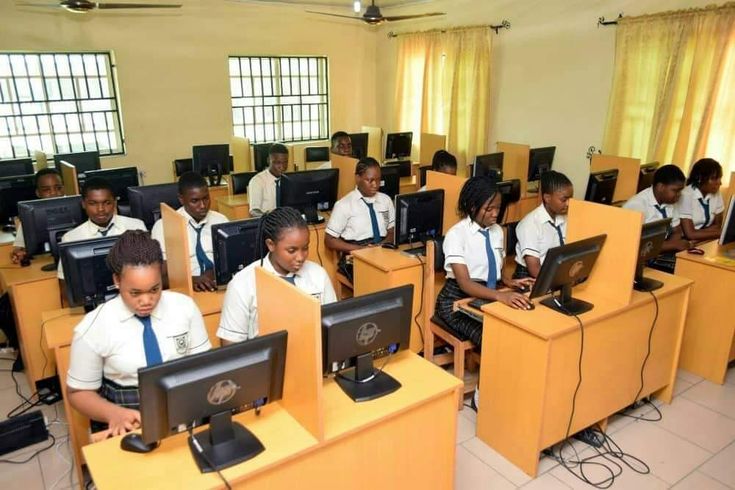
During my visit to schools for data collection for a survey I’ve been conducting, titled “ICT Implementation among Nigerian secondary schools”, I realized that the computer laboratory in some of these schools was everything you would expect (rows of desktops, neatly arranged, a projector mounted on the ceiling, and a clean whiteboard at the
front of the room).
It looked exactly like what digital education should look like, but one conversation changed my impression entirely. I asked, “How regularly do students use this lab?”
The pause before the answer told me everything. “Not very often.”
These visits opened my eyes to a pattern I have since seen repeated in school after school.
Students who can recite the definition of a computer but hesitate to turn one on. Students who can correctly label the parts of a keyboard in an exam booklet but struggle to type a sentence. Students who have studied ICT for six years, from JSS1 all the way to SS3, yet feel genuinely anxious the first time they sit a Computer-Based Test.
Not because they are unintelligent. Not because they did not study. But because knowing about a thing and being able to use it are two entirely different skills.
To be fair, this is not a problem born out of negligence.
Even with the existing infrastructural gap, some of the schools I have visited are sincerely trying. The teachers are showing up. The curriculum exists. The laboratories are, in some cases, furnished.
But the gap between intention and expected results is wide, and it is being widened by a set of
very real, very practical constraints:
- A single lab shared among hundreds of students leaves little room for individual practice
- Concerns about damage and repair costs keep equipment locked away more than it should be
- Examination pressure pushes teachers toward content delivery rather than hands-on engagement
- An unreliable power supply turns what should be active sessions into passive ones
The current result is a generation of students who have been educated about technology without ever truly being formed by it. And the consequences are obvious.
I have sat with students on the eve of their first CBT examination, students who had prepared thoroughly, who knew their content, watching them grow visibly nervous at the thought of navigating a computer screen under timed conditions. The anxiety was not about the subject matter. It was about the interface, and that should not be the case.
If a student has spent six years in a school that offers Computer Studies, the least that time should produce a young person who can confidently sit at a screen, complete a task, and move on. Not someone for whom the machine itself is the obstacle. As I always teach my students before any digital/tech skill training, that “they can only be as smart or dull as the person before the screen”.
Here is the truth we need to say more plainly:
Digital education that does not produce digital competence has not fulfilled its purpose.
Passing an examination is not the finish line. The finish line is a student who can function independently, confidently, and capably in a world that runs on technology.
And that era is not far off. It is already here.
The young people in our schools today will be expected to submit applications online, collaborate on digital platforms, navigate workplace tools, access learning resources independently, and sit assessments on screens. This will be true whether they become engineers or tailors, doctors or traders. Digital fluency is no longer a professional advantage. It is a basic requirement for modern life.
So what needs to change?
The computer laboratory must stop being treated as a showroom, i.e., a space that signals a school’s modernity without actually delivering on its promise.
It must become a workshop.
A place where students come regularly, not occasionally. Where they make mistakes on real machines and learn to correct them. Where they build the kind of quiet confidence that only comes from repeated, hands-on experience.
Because here is what years of working in educational technology have taught me:
You do not become comfortable with a computer by reading about one. You become comfortable by using one, again and again, until it no longer feels foreign.
The goal was never for our students to have theoretical ideas and concepts about technology.
The goal is for them to be practical and competent from ideation to innovation using technology.
#Ultratechict #TechAChild #DigitalLearning #EdTech #ComputerEducation #FutureReadyStudents